
You can explain your anxiety better than most people can explain anything.
You know where it started, what sets it off and which patterns you picked up growing up. You’ve thought about it, read about it and probably analyzed it from 14 different angles.
Maybe you’ve even been in therapy before. And you still feel anxious.
If you’re wondering why therapy is not helping your anxiety, it doesn’t mean you did it wrong.
It doesn’t mean you’re too broken for therapy, either. More often, it means the work stayed in your head.
Why isn’t understanding my anxiety making it go away?
Self-aware people are usually very good at thinking.
They analyze, problem-solve and look at their anxiety from every angle.
That insight matters, and it often took real work to get there.
But understanding anxiety doesn’t resolve it.
You can’t problem-solve your way out of a feeling.
Solving your thoughts won’t heal the part of you that’s afraid, because fear has to be felt, not just analyzed.
Many self-aware overthinkers say some version of the same thing:
“I already knew what my therapist was telling me.”
They’re often right.
What’s been missing is a place to slow down and feel what they’ve gotten so good at explaining.

Why do I feel anxiety in my body before I can think?
Emotions are somatic first.
Your body registers fear before your mind has formed a single thought about it.
A tight chest, a knot in your stomach, a jaw you didn’t realize you were clenching.
Most of us have been trained to ignore those physical sensations.
So when the body sends a signal, we do what makes sense. We distract ourselves, we avoid whatever brings the feeling up, or we dissociate and go somewhere else in our heads.
Those responses protected you.
They also keep the fear exactly where it is.
What does it mean to process emotions?
There are two common ways people get stuck:
Pure analysis. Logical, articulate and disconnected from what you feel.
Emotional flooding. So overwhelmed by the feeling that clear thinking isn’t possible.
The goal is the middle: thinking logically while you process what you feel.
That’s what processing means.
It isn’t talking about an emotion from a safe distance, and it isn’t being swept away by it.
Most people were never taught how to do this. Many grew up in homes where emotions weren’t named or welcomed.
You might have had a roof over your head and food on the table and still never learned what to do with fear, sadness or anger. If no one showed you how to stay with a feeling and still think, of course you default to one side or the other.
That’s a skill you can learn, not a flaw in who you are.
Why does talk therapy sometimes not work for anxiety?
Talking matters, but retelling painful experiences over and over without processing them can leave people feeling worse, and sometimes re-traumatized.
This happens more often with therapists who aren’t trained in trauma or in how the body holds emotion.
When talk therapy isn’t working, it’s often because the conversation stays at the level of insight.
You leave with a clearer explanation, but the feeling underneath hasn’t changed.
When processing happens, the fear and pain start to lose their grip.
You can feel an emotion without being taken over by it or pushed into checking out.
People often describe more presence in their own lives, more trust in themselves and others, a stronger sense of self-worth and more freedom.
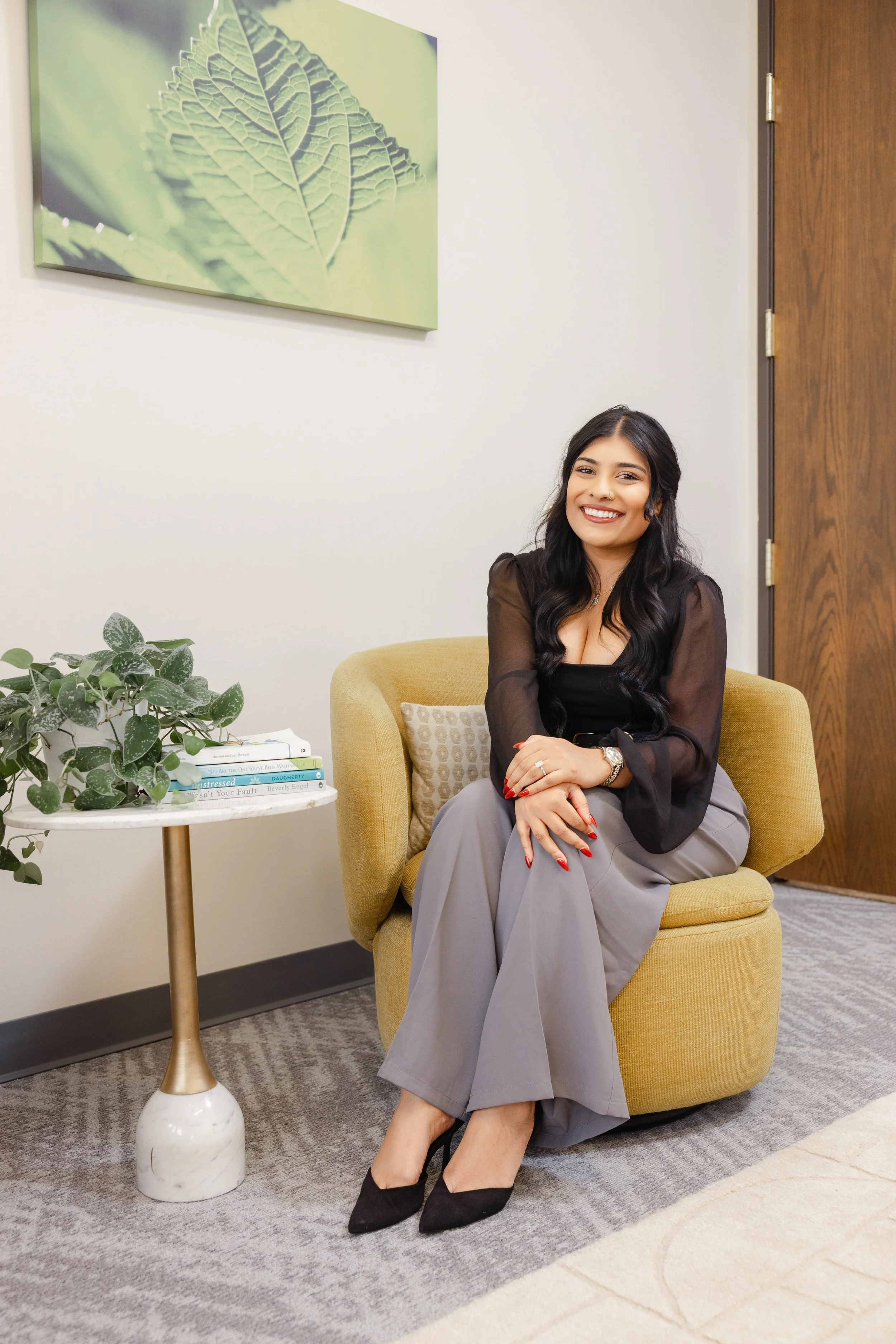
Ashana Chand, APCC #20932, supervised by Marisa Ronquillo, LMFT #122594.
What should good therapy feel like?
If therapy hasn’t helped before, it’s worth asking what was missing. Common complaints about past therapy include:
Feeling unseen or misunderstood
Having to repeat your story because your therapist forgot important details
A therapist who showed up late or seemed checked out in session
Good therapy comes with full attention and consistency. You shouldn’t have to keep explaining yourself, and you should feel like your therapist knows you.
It should also be a place where you can be honest about therapy itself.
If you tend to people-please, you might catch yourself trying to be a “good client,” acting fine so you won’t seem difficult. A good therapist invites you to say when something isn’t working, and then adjusts.
Why does therapy for anxiety take time?
Most people arrive deeply embedded in patterns that have been in place for years, sometimes for most of their lives.
Those patterns made sense once. Changing them happens in stages:
Building rapport and a real relationship with your therapist
Undoing old patterns
Learning and practicing new ones
There is no set timeline, and healing isn’t linear.
But there is a real benefit to starting earlier in life.
The sooner you learn to process emotion instead of only analyzing it, the more that skill can carry into your relationships, your career and how content you feel day to day.
Anxiety therapy in Sacramento and across California
Ashana is an anxiety therapist for self-aware overthinkers.
She works with people, often in their 20s, who already know why they feel anxious and want more than another round of insight. Her style is warm, approachable and easygoing.
She is supervised by Marisa, a trauma therapist with nearly nine years of experience, and spent three years working in an intensive outpatient program before joining Insightful Roots.
Here’s what your first month with Ashana looks like:
Session 1: Getting to know you, what brings you to therapy and what you’ve already tried. You start making a plan together.
Sessions 2 and 3: Understanding your patterns and building skills, with something manageable to practice or reflect on between sessions.
Week 4: Checking in on the plan, including what’s helping, what still feels hard and how therapy itself feels for you.
Ashana has weekday openings, in person at our Fair Oaks office near Sacramento and by telehealth across California. Book a free intro call to see if she’s the right fit.
Frequently Asked Questions
-
Understanding is a good start, but it doesn’t resolve anxiety on its own. Therapy can help you feel and process the fear in your body while still thinking clearly, so it loses its grip.
-
That’s common, and it doesn’t mean you’re the problem. Often the fit wasn’t right or the work stayed at the level of talking. It’s worth looking for a therapist who focuses on processing, not just insight.
-
Yes, especially if you tend to people-please or worry about being “too much.” Tell your therapist when something feels off. At Insightful Roots we check in during the first month to see how therapy itself is feeling for you. The therapist you work with will tailor and adapt to best support you.
-
Yes. Ashana sees clients by telehealth anywhere in California and in person at our Fair Oaks office near Sacramento. We can only work with clients who are located in California.