What Is Bilateral Stimulation? Understanding How EMDR Helps the Brain Process Trauma
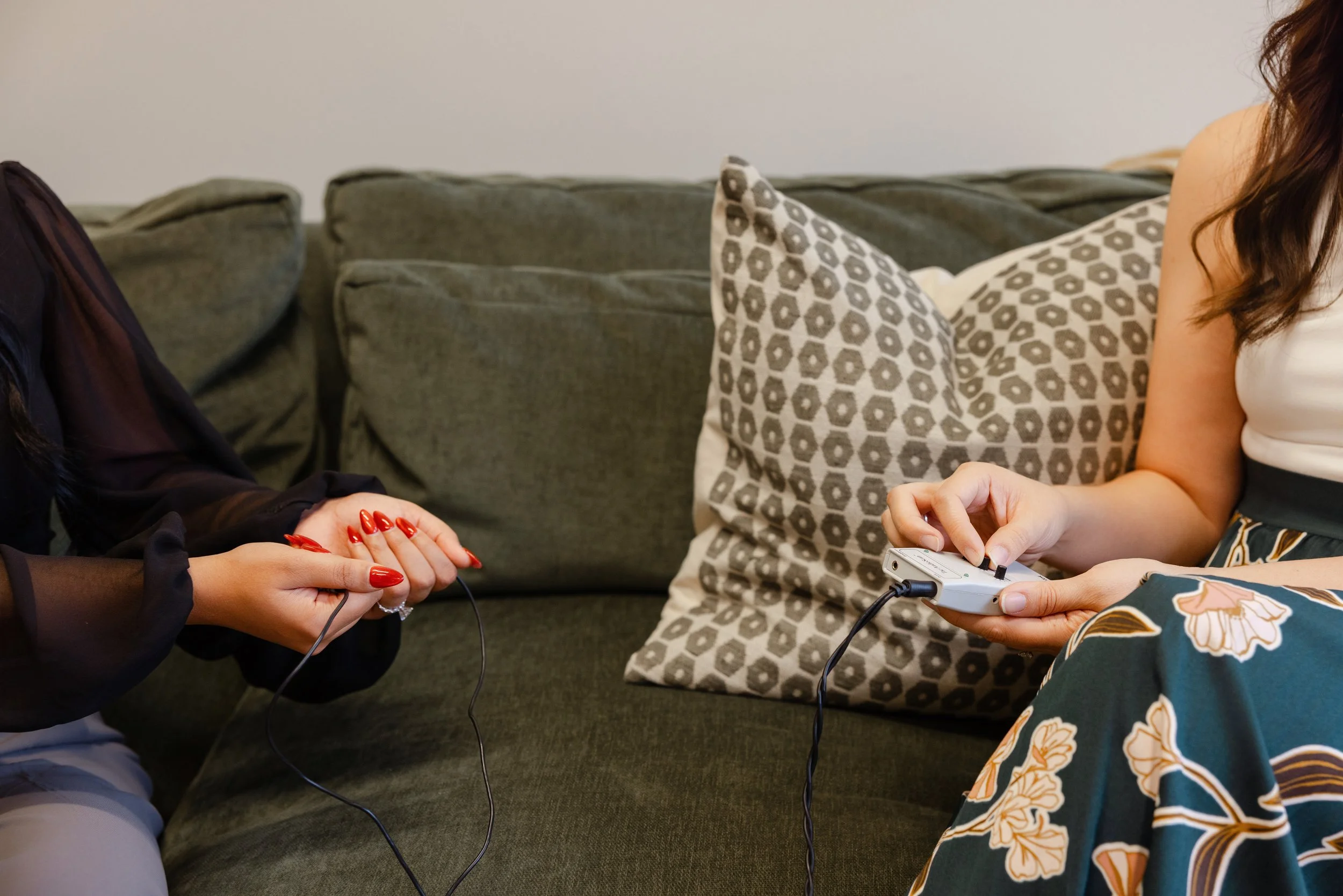
What Is Bilateral Stimulation?
If you’ve been researching EMDR therapy, you may have come across the term bilateral stimulation and wondered what it actually means.
Bilateral stimulation is a key part of Eye Movement Desensitization and Reprocessing (EMDR), a research-supported therapy used to help people process traumatic or overwhelming experiences.
In simple terms, bilateral stimulation involves alternating stimulation on the left and right sides of the body. This can happen through guided eye movements, tapping, or gentle pulses held in the hands.
While it may look unusual at first, bilateral stimulation helps activate the brain’s natural ability to process experiences that may have become “stuck” in the nervous system.
Why Trauma Sometimes Gets “Stuck” in the Brain
Many people come to therapy feeling confused about why certain memories or experiences still affect them years later.
You may notice things like:
Emotional reactions that feel stronger than the situation calls for
Anxiety that shows up suddenly or feels difficult to control
Certain memories that still feel vivid or overwhelming
Feeling like you understand something logically, but your body still reacts
This happens because traumatic or distressing experiences are often stored differently in the brain.
Instead of being processed and integrated like most memories, these experiences can remain stored in a more reactive part of the nervous system. When something reminds your brain of that experience, it can trigger the same emotional or physical responses as if the event is happening in the present.
This is where EMDR and bilateral stimulation can help.
How Bilateral Stimulation Supports Healing
During EMDR therapy, bilateral stimulation helps the brain reprocess memories in a way that allows them to become less emotionally overwhelming.
Your therapist may guide you through bilateral stimulation using:
Eye movements following a moving object or light
Alternating tapping on the hands or knees
Handheld pulsers that gently vibrate from left to right (see image at top for reference)
As this alternating stimulation occurs, the brain begins to integrate memories, emotions, and body sensations in a more adaptive way.
Over time, many people notice that memories that once felt overwhelming begin to feel less intense, less triggering, or more distant.
The goal of EMDR is not to erase memories. Instead, it helps the brain store those memories in a way that no longer keeps the nervous system stuck in survival mode.
Why Bilateral Stimulation Works

Researchers are still learning exactly how bilateral stimulation works, but several theories help explain why it can be effective.
One theory suggests that the alternating stimulation helps engage both hemispheres of the brain, allowing memories to move from emotional reactivity into more integrated processing.
Another theory compares bilateral stimulation to the way the brain processes experiences during REM sleep, when our eyes naturally move back and forth while the brain processes emotional memories.
While the exact mechanisms are still being studied, decades of research support EMDR therapy as an effective treatment for trauma and other distressing experiences.
What Bilateral Stimulation Feels Like in Therapy
Many people feel nervous about trying something unfamiliar in therapy, especially when they hear terms like bilateral stimulation.
In practice, the process is often much gentler than people expect.
EMDR therapy always begins with preparation. Your therapist helps you build tools for emotional regulation and ensures you feel safe before beginning any trauma processing work.
During bilateral stimulation, you remain fully aware of your surroundings and in control of the pace of the session. The therapist checks in regularly and can pause at any time.
Many people describe the experience as feeling like their brain is organizing thoughts and emotions that previously felt tangled or overwhelming.
Is Bilateral Stimulation Only Used for Trauma?
Although EMDR was originally developed to treat trauma, bilateral stimulation can support healing for a variety of concerns.
People often use EMDR therapy to address:
Childhood trauma or emotional neglect
Anxiety or panic
Relationship wounds or attachment injuries
Medical trauma or birth trauma
Negative self-beliefs rooted in past experiences
Because bilateral stimulation helps the brain process unresolved experiences, it can be helpful whenever someone feels stuck in patterns that insight alone hasn’t shifted.
EMDR Therapy in Sacramento

At Insightful Roots Therapy, EMDR is offered in a way that centers safety, nervous system regulation, and relational support.
Healing doesn’t have to mean forcing yourself to relive painful memories. Instead, therapy can help your brain process experiences in a way that allows you to move forward with more clarity, stability, and ease.
If you’re curious about whether EMDR therapy might be a good fit for you, you’re welcome to schedule a free 15-minute consultation to ask questions and learn more.